You documented everything. Nobody’s using it.
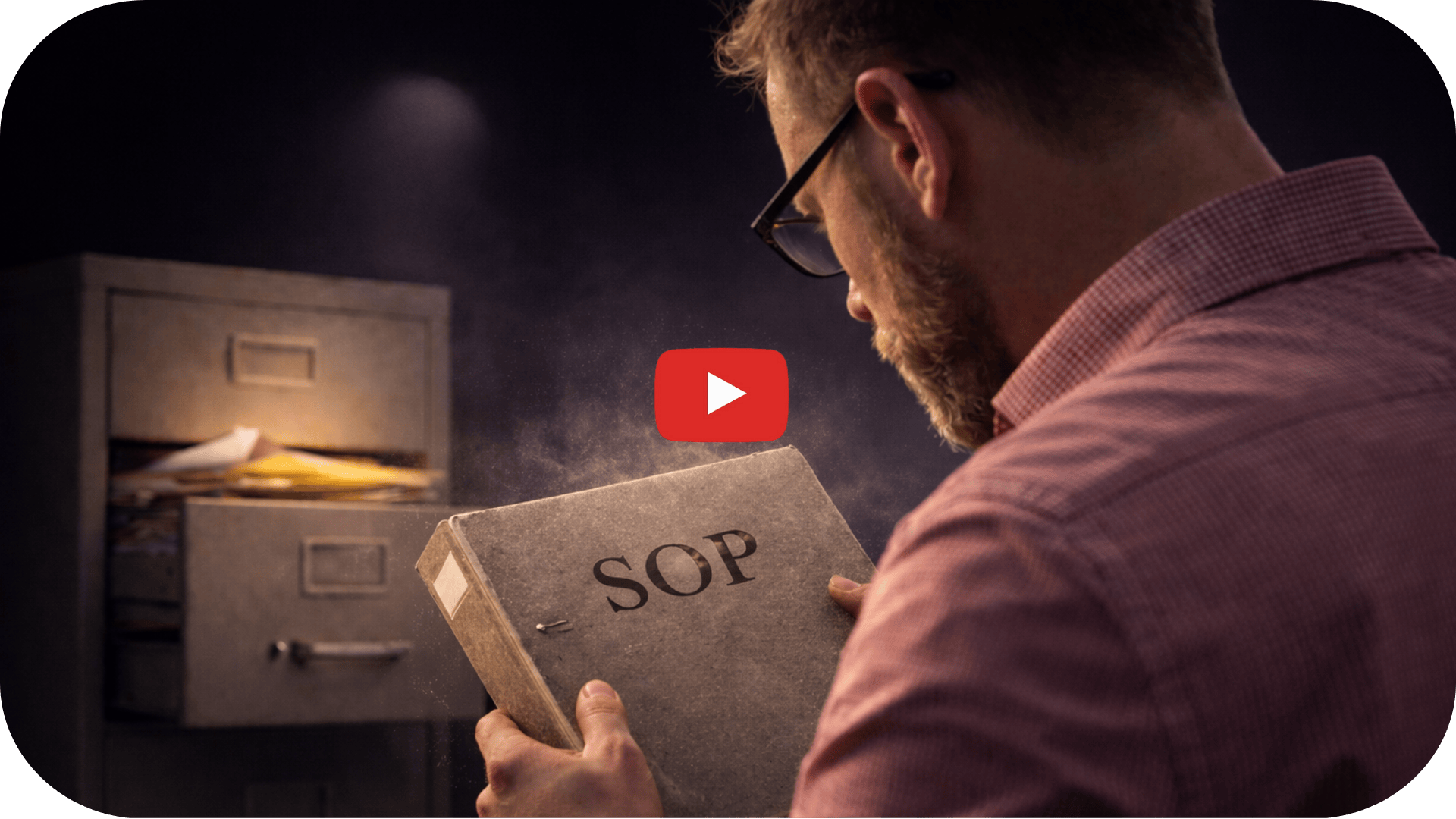
I worked with a founder who had a 47-page operations manual. Impressive, right? Except nobody had opened it in six months. His team still pinged him on Slack instead. Quicker to ask than to search.
The documentation existed. But there was no ownership. No one was responsible for keeping it current. No one was accountable for training new people on it.
So it just sat there. A monument to good intentions.
The Real Problem
Most founders think the solution to repeated questions is better documentation. So they write detailed SOPs. Screenshots of every click. 47 steps for a process that takes 10 minutes.
Then nothing changes.
The problem isn’t the documentation. The problem is ownership. You created the SOPs. You maintain the SOPs. You’re the only one who knows where they are. Which means you’re still the bottleneck.
The Four-Column SOP Index.
You need an SOP index with clear ownership. Not just a list of documents. A system that tells everyone who owns what.
Four columns.
- Process name. What’s the process?
- Accountable owner. One person who owns it. Not two people. Not a team. One name. They’re accountable for making sure the SOP exists, stays current, and people are trained on it.
- Responsible executors. Who actually does the work? Ideally two or more, so you’re covered if someone’s out.
- Link to the live SOP. Not a copy. The live document. One source of truth.
The magic is in column two. If two people are accountable for something, nobody is. One name on it.
Playbook-Style SOPs.
Here’s where most people go wrong. They write novels. 47 steps with screenshots of every click. Nobody reads that. Nobody maintains it. And the moment your software updates, half of it’s wrong.
I prefer playbook-style SOPs. Five or six main points. High level.
For example, when I appear on a podcast, my team runs an SOP. It says: repost to socials, cut into snippets, update the interviews page, update the podcast bio. That’s it. Four lines.
They know what to do.
Short SOPs with clear owners get used. Long manuals with no ownership become monuments.
The I-We-You Handover Method
How do you get processes out of your head and into your team’s hands? Three steps.
- I: Demonstrate the process. Record a Zoom call walking through it. Now they have a reference video.
- We: Next time the process runs, do it together. They execute while you support. They add any missing steps to the SOP.
- You: They own it now. They run the process. They maintain the SOP. They train others on it.
You’re out of the loop. One less thing on your plate.
Three Mistakes That Kill SOP Ownership.
- Mistake one: Assigning more than one owner. The accountability column should only have one name.
- Mistake two: Not linking to live documents. If you copy and paste SOPs into the index, they get out of sync. Always link to the live document.
- Mistake three: Not holding people accountable. Schedule quarterly reviews. When something goes wrong with a process, that’s a trigger to review the SOP.
Your Next Steps.
List your core processes. Create your SOP index. Assign one owner to each process. Use I-We-You to hand over anything still in your head.
When your SOPs have clear owners, they stay current. When they stay current, people actually use them. When people use them, you stop answering the same questions over and over.
That’s how you get your time back.